

Eloise Badenhorst
Special to North Carolina Construction News
North Carolina’s construction industry is thriving, especially in high-growth areas like the Triangle. However, for contractors and project managers, this also brings pressure to balance the demand for speed with the necessity of accuracy. Margins are often razor-thin, reworks can increase expenses and the labor shortage is persistent.
Fortunately, moving from a reactive to a proactive building model is possible with today’s innovations. A firm like BuildingPoint SouthEast can help companies navigate the technological shift and achieve great profitability.
What Are the Top-Rated Construction Solutions That Enhance Construction Speed and Accuracy?
BuildingPoint SouthEast offers Trimble field solutions for every construction phase. It states, “From field layout equipment to 3D scanning and robotics, we’re able to bring you the latest in construction technology and be your partner to grow your business, increase your productivity and maximize efficiency.”
Here are solutions from this industry leader, ranked based on their impact on the project cycle, starting from the earliest planning stages.
1. VDC Services for Proactive Clash Detection
Virtual design and construction (VDC) is the process of building an entire project virtually, then physically. The virtual build is a full-scale, 3D rehearsal. It involves assembling every component, from the foundation to the mechanical, electrical and plumbing (MEP) systems, in a digital environment.
Problem-solving becomes faster. Resolving a clash in a digital model can take hours, but doing it on-site can take weeks of back-and-forth communications. Also, design modifications are a minor cost compared to field adjustments, making the return on investment (ROI) staggering.
For its complex Red Ventures project, Choate Construction initially sought a standard 2D-to-3D model conversion. What it received from BuildingPoint SouthEast was much more. Instead of a static model, the firm got an active partner that delivered “an in-depth and consistent QA/QC process” for the project.
The proactive approach was a game changer. Adam Simpson, Choate’s VDC manager, reflected on the process, stating the real value was in “the constructability review and flushing out the inconsistencies in the drawings, usually things you wouldn’t find until you’re out in the field, earlier and not when it costs money.”
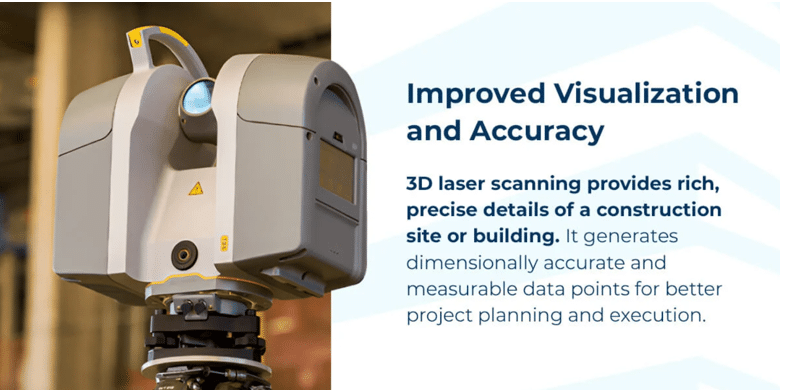
2. 3D Laser Scanning for Flawless As-Built Data A 3D laser scanner fires millions of laser points per second, capturing the exact position of every visible surface to create a dimensionally perfect 3D “point cloud.” It gives contractors the ability to configure an accurate model, which shows any discrepancy, misalignment and potential clash. This reduces the need for reworks and accelerates project timelines.
Hockaday Mechanical’s challenging renovation project involved notoriously congested ceiling spaces and had a tight schedule. To address these pain points, it partnered with BuildingPoint SouthEast to perform a 3D scan of the building before demolition.
The scan allowed the modeling team to start their work a month early. Moreover, because its models were designed around a perfect digital replica of the existing conditions, almost all the field elements were installed without clashes.
3. Robotic Total Stations for Single-Person Layout
In traditional methods, two to three people manually interpret 2D paper plans, calculate offsets and triangulate points. It is a slow, labor-intensive process that carries a high risk of human error.
A robotic total station (RTS) turns a three-person layout team into a one-person task. It streamlines complex layout steps and enhances measurement accuracy within millimeters of the true design location.
Buchanan Concrete of the Carolinas Inc. had a project with massive scale and intolerant specs. It involved an air traffic control tower foundation at the Charlotte-Douglas International Airport and over 1,000 dowel embeds that had to be placed within a ⅛-inch tolerance. It achieved the field layout in half the time with the help of a Trimble RTS, resulting in the precast fitting perfectly.
Here are the answers to common questions about construction technologies:
What is the price of a robotic total station?
A robotic total station’s exact price tag varies based on its features and capabilities. However, its true cost lies in the missed opportunities of not having one. It helps reduce reworks, delays and staff salary, as it completes the work of two to three people on its own. To get a clearer picture, contractors can contact a manufacturer and ask for a detailed ROI analysis tailored to the firm’s specific operations.
Where can companies rent 3D laser scanning equipment?
BuildingPoint SouthEast offers a full fleet of rental construction equipment, including 3D laser scanners. Renting is a low-risk way to leverage the technology on a single project, try it before buying or supplement an existing fleet during peak demand.
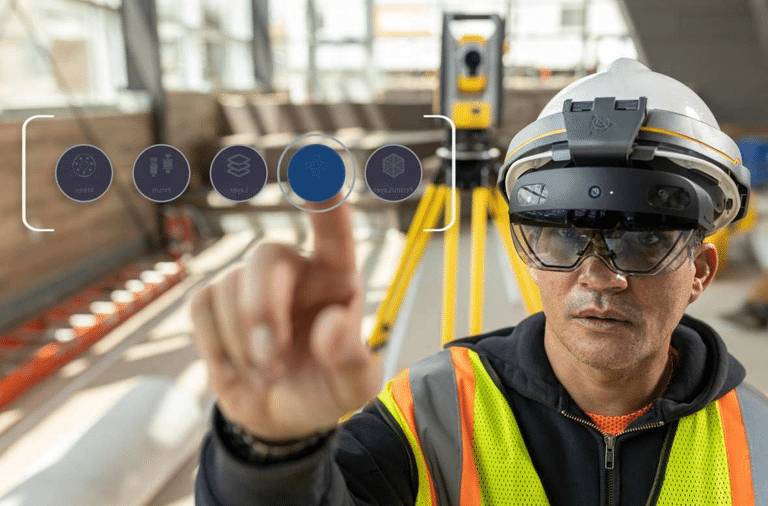
What training is required to use mixed reality on a jobsite?
Mixed reality equipment is designed for construction professionals in the field, not software engineers in an office. A dedicated partner like BuildingPoint SouthEast provides comprehensive, on-site training to get crews comfortable and proficient with the tools. This ensures the technology becomes a productive part of their workflow.
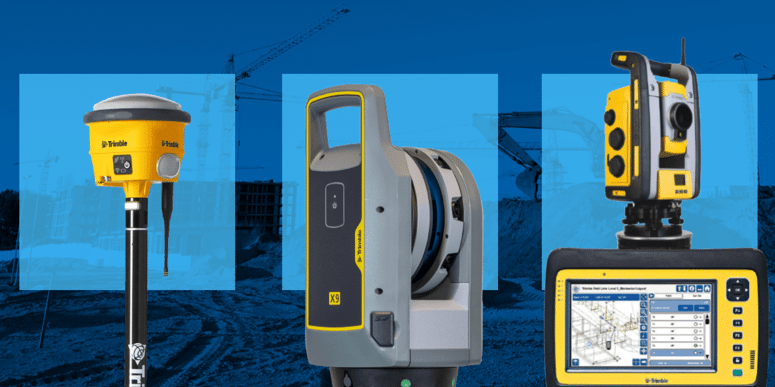
Take the Next Step in Project EfficiencyThe case studies of firms like Choate, Hockaday Mechanical and Buchanan are not outliers. They represent a clear trend, where leading North Carolina contractors are actively using technology to move faster and build with higher quality. VDC and 3D scanning remove the guesswork, while robotic stations and integrated platforms streamline processes.
However, the most powerful tech is only effective if the team knows how to use it. Partnering with BuildingPoint SouthEast provides essential local training, service and support to ensure successful adoption and a positive ROI.
Eloise Badenhorst is a digital analyst at an award-winning agency with 18 years of writing experience, including over five years covering North Carolina construction projects, architecture, commercial development and infrastructure. With a degree in journalism, postgraduate qualifications in translation & professional writing and visual studies, and professional certification in digital marketing, she brings comprehensive insights on the evolving construction landscape across the Carolinas.